

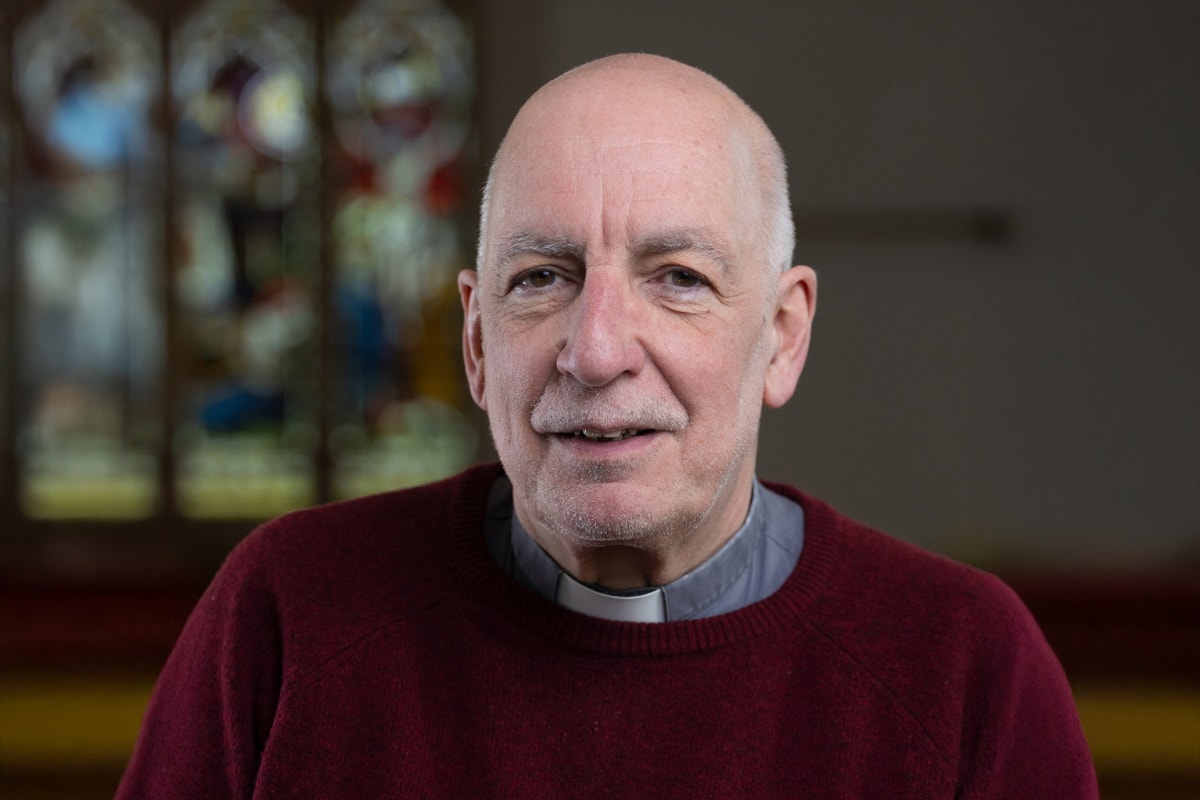
Trustee Simon Baker reflects on his years of supporting homeless people as a minister in the West Midlands. The experience influenced Simon’s decision to join the charity and to continue making a difference for the marginalised. As Lent approaches, Simon urges churches to reflect on homelessness – and consider ways they can help the cause; whether by opening the conversation with their congregation, becoming better informed of ways to help homeless people in their area, or fundraising for homelessness charities.
I’m Reverend Canon Simon Baker, and I have spent all my working life as a minister in the Church of England. I have served in different parts of the country, ending my ministry in Lichfield, a city in the West Midlands. Now retired in Somerset, I reflect on a career that exposed me to many walks of life.
My introduction to Church Homeless Charity
When I lived in Lichfield, one of my neighbours was a trustee of Church Homeless Charity. Through many conversations with her, I became interested in the charity’s work. When I retired, I wanted to give something back – not just to my local community, but more broadly. In ministry, your time is consumed by the immediate pastoral needs around you. Retirement gave me the opportunity to step back and look at wider issues, and supporting a charity that helps people experiencing homelessness was something I felt drawn to.
Homelessness can happen to any of us
While in Lichfield, the churches came together to provide winter accommodation for people who were sleeping rough. Our own church wasn’t suitable for hosting a shelter, but we worked as a partnership – some churches provided accommodation, others helped with resources, and volunteers took turns staffing the shelter. That experience made me realise none of us are that far away from being homeless, only one or two steps, perhaps. We’re all of us really quite vulnerable.
As a minister, you often live in tied housing, meaning your home comes with your job. That’s fine when everything is going well, but if you lose your role, you also lose your home. It struck me that my own situation was not so far removed from the people using the shelter.
The more I talked to those experiencing homelessness, the more I understood how easily lives can unravel – job loss, relationship breakdown, poor health. Homelessness can happen to anyone.

How we help people in a practical way
Church Homeless Charity doesn’t get involved in building houses or flats for people to live in. We partner with some organisations that do that, but what we do is give small grants to individuals to help them begin to put their life back together again.
Many people assume homelessness is just about rough sleeping, but there are so many hidden cases – people sofa-surfing or staying in temporary accommodation. And homelessness is an issue that touches every community, whether suburban or rural.
Our grants help individuals take those crucial next steps.
If you’re a big charity, sometimes the wheels grind much more slowly. After a request is granted, the money is transferred within seven days. A swift response can make all the difference when someone is trying to get back on their feet.
The importance of small grants
At Church Homeless Charity, we provide small but life-changing grants of £175 for individuals. They help people take steps towards stability – whether it’s clothing, furniture, travel costs, or therapy. Our group grants help schemes to offer activities like music or gardening therapy. Or they take residents out to enjoy a social event or the great outdoors.
Homelessness is extremely isolating, and sometimes what people need most is the opportunity to build connections and to learn to trust others.
Some of our grants are for practical things – pots and pans for someone moving into their first flat, a bus pass so someone can get to a new job, or replacement ID. Some grants may seem unexpected – a guitar, for example. But if music helps someone feel at home again, then it’s a necessity, not a luxury. With the right support, people can begin again.

A call to action for churches this Lent
Lent invites us to engage in a number of weeks of deeper reflection. On ourselves and on the world, the things that we do well and the things that we don’t do. It invites us to look more closely at Scripture and to see how Jesus himself reaches out to those who are marginalised and on the edge of society. He has a real concern for those who are poor and those who are needy.
When we think about sin, we often think that it’s an individual thing, the things I’ve got wrong, the things that I want to say sorry for. But sin is also about the faults and the wrong that is, in our wider society, the way in which it’s fractured and broken. And there are many things we can look at, and one of them, of course, is homelessness, people who no longer have a home in the way that most of us enjoy. That’s a sin in our society, and it needs not just thinking about and praying about, but a practical response as well.
The more we learn, the more we think, the more we pray, the better our practical response will be.
Building partnerships with churches
Church Homeless Charity has its roots in the Church Army, founded by Wilson Carlile, and while we don’t receive funding from the Church of England, we would love to build more partnerships with churches in England. Yes, financial support helps us provide grants, but just as important is raising awareness.
You can start by engaging with the issue, learning more, and bringing homelessness into conversations. Churches are encouraged to advocate for homelessness to remain on the public agenda.
We’d love churches to be able to tell us stories about how they’re helping people to begin again. And we, in our turn, will tell them stories about how we’re helping people start new lives with our grants and our encouragement and our prayers.
Resources are available to support your church
It can be a little bit daunting to pick up a topic as broad and as wide as this. And so, we’ve made available specific resources that will help churches. These include guides, posters, prayers and more.
If there’s something you would particularly like, let us know and we’ll provide something customised. We know that churches vary in their style and in what they do for worship, so we might not be able to do something absolutely specific.
Sometimes, someone might knock on the Vicarage or a manse or a place that is identified as the home of a minister asking for help, and it can be quite confusing as to what’s the best and appropriate thing to do. Our booklet, ‘How to Help Homeless People,’ which offers guidance on supporting those people confidently and effectively.
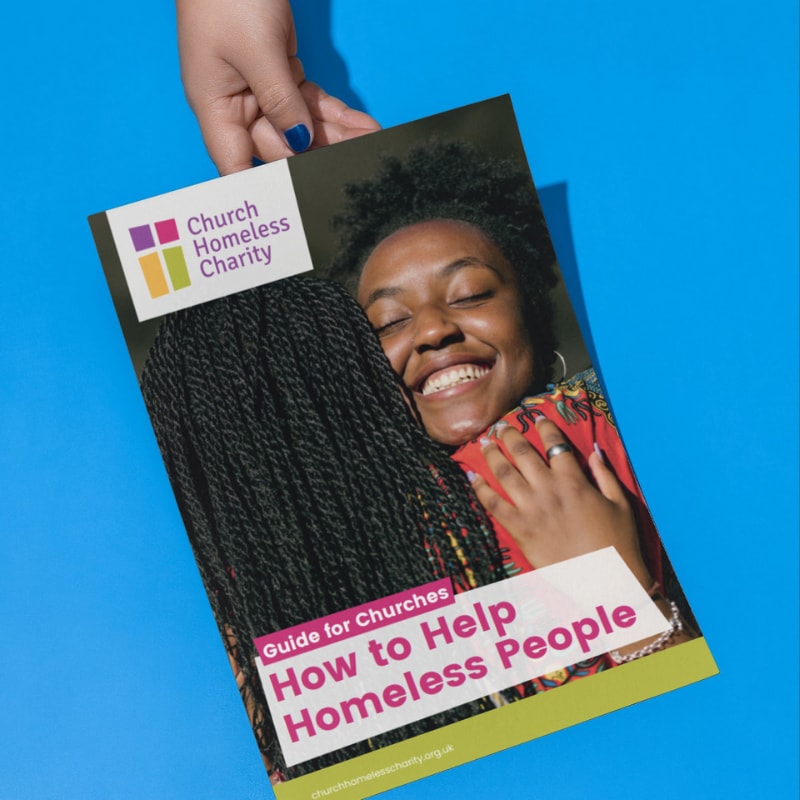
It’s beneficial for churches to learn about local services and work in partnership with existing support networks.
If you have a moment, explore the materials available on our resources page.
Fundraising for homeless people
There are many ways churches can get involved with fundraising. Certain times of the year, like Christmas and Lent, offer natural opportunities.
Once the conversation has started about homelessness, we hope that you’ll consider choosing to support our work through fundraising. You can find fundraising ideas for churches on this page.
Church Homeless Charity is always there – ready to help with information and resources. And we look forward to hearing from you and building a connection. Together, we can make a big difference to those experiencing homelessness.