

As winter settles in, thousands of families in the UK are navigating the harsh realities of temporary housing. For many, this isn’t just a short transition, but an extended period marked by stress, uncertainty, and a loss of the comforts and stability that a home should provide. This Christmas, while some families may gather around a decorated tree with room to spare, families in temporary housing face a very different reality – one where space, privacy, and basic essentials are often out of reach.
Losing a home, losing stability
The journey into temporary accommodation often starts with a crisis: a job loss, fleeing domestic violence, or even seeking refuge from war-torn countries. Families moving into these spaces are typically leaving behind most, if not all, of their belongings. The loss of a permanent address, personal space, and a stable routine can feel overwhelming, especially for children. For parents, the weight of uncertainty and the pressure to provide stability in an unstable environment create a constant strain.
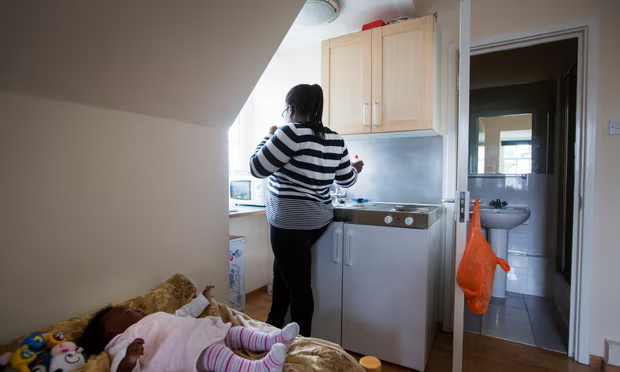
In many cases, families are crammed into single rooms that must serve as bedrooms, kitchens, and living areas all at once. Privacy becomes a luxury, with every activity – from cooking to sleeping – happening in the same limited space. Parents are often kept up at night, worrying about their children’s futures and struggling to maintain a sense of normalcy.

Space, privacy, and the struggle for dignity
One of the most pressing needs for families in temporary accommodation is space. Without room to play, study, or even unwind, children in these settings miss out on the activities and experiences essential for their development. Families often share beds or sleep on the floor due to lack of furniture, and there is frequently no area for children to complete homework or simply relax.
Privacy is another challenge. Parents lose the ability to create boundaries or enjoy a moment of quiet, making it difficult to maintain family routines or find time to care for their own mental health. The feeling of being “on display” can make families feel stripped of dignity, unable to take the small comforts of home for granted.
Missing the joy of a home-cooked meal
For many, a warm, home-cooked meal is the epitome of comfort, but in temporary accommodation, cooking facilities are often limited or non-existent. Families may have no choice but to rely on pre-packaged meals, or worse, go without proper meals altogether. For those with access to only a microwave or kettle, preparing nutritious food for children becomes nearly impossible.
Without access to proper kitchen facilities, the tradition of preparing meals together, especially around the Christmas, is out of reach. Simple pleasures like baking treats or making the traditional roast aren’t possible, leaving families unable to connect over one of the most comforting rituals of the season.
Christmas without the traditions
The festive season can intensify the sadness of living in temporary accommodation. Families have no room for a Christmas tree or the presents that Santa may bring. For children, the joy and magic of the season are dampened by the reality of their surroundings, where celebrations are scaled down or absent.
The inability to welcome family or friends due to space restrictions or lack of funds for transportation further isolates these families. Instead of hosting relatives or visiting loved ones, they’re often left to face Christmas time alone, without the warmth and connection that gatherings bring.
The hidden costs of temporary living
Families in temporary housing face hidden costs that exacerbate their struggles. Energy meters, for example, can eat up a significant portion of a family’s limited income. As damp and condensation build up in cramped spaces, mould becomes a real health hazard, especially for young children whose immune systems are more vulnerable. Respiratory problems can quickly escalate, and parents are left feeling helpless, unable to provide a safe and healthy environment.
In the absence of a sufficient income, families are often forced to rely on food banks, yet even this help may not be enough to provide for all their needs. Many lack the money for hygiene products, bedding, window coverings, or even heating, making day-to-day living uncomfortable and unsafe. The mental toll of these conditions is profound, with parents struggling to remain hopeful and optimistic for their children’s sake.
A call to bring hope and comfort
No family should have to spend Christmas in such hardship, and yet for thousands, this is the reality. At the Church Homeless Charity, we are committed to providing targeted, compassionate support for families in temporary accommodation. Through our grants, we offer essential items like duvets, winter clothing, hygiene products, and even a small bit of joy that can make the season brighter.
Your support could provide a family with the comfort of knowing someone cares.