
At Church Homeless Charity we support three schemes specifically for homeless veterans. Hardwick House in the Northeast is one of the schemes. In this Q&A, Support Worker John Glendenning provides valuable insight into the challenges of homeless veterans. He also discusses the journey that homeless veterans take within the scheme.
Q: Can you explain what Hardwick House is and how you support a homeless veteran’s journey?
A: Hardwick House is supported accommodation for Homeless Veterans which is commissioned by the local authority – comprising 20 single self-contained flats.
We support homeless veterans with short-term accommodation (up to 18 months) and support all customers to develop the skills they need to live independently and go on into independent housing in their area of choice. Hardwick House has four main pillars of activity which are:
- Independent living skills and development
- Health and wellbeing
- Training and education/maximising income
- Structured transition into independent housing
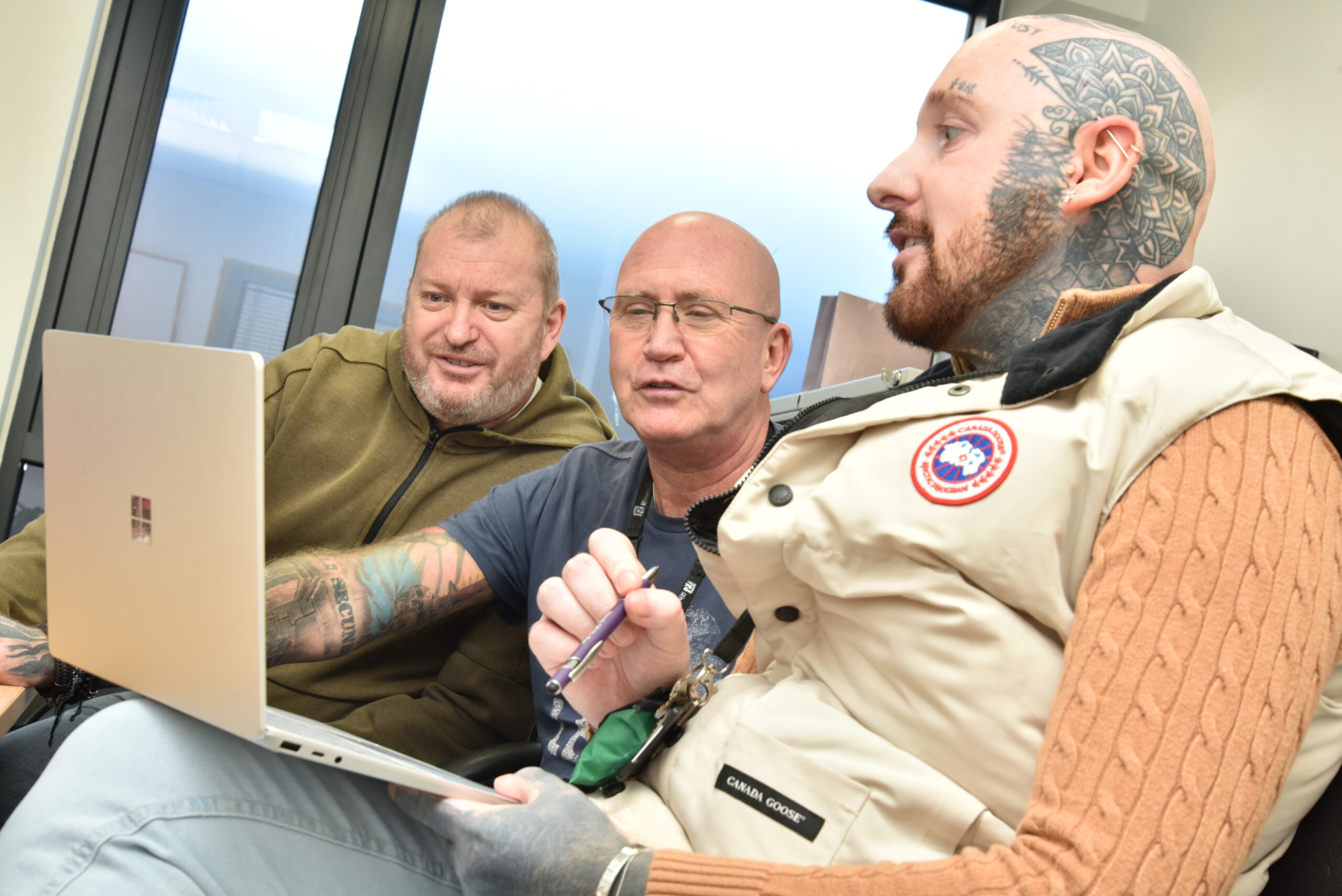
Pictured l-r: Lee Deighton, George Bell, John Glendenning: support staff at Hardwick House.
Q: What are some of the biggest challenges faced by the veterans you support?
A: The challenge we face currently is a shortage of housing in the Middlesbrough area. The majority of my group want to move on and are actively looking for somewhere to live – either in social housing or in the private rental sector. A lot of my time is spent helping people find somewhere suitable to live.
Because of the way that the benefit system works they cannot work while they are in supported accommodation. So until they can find somewhere independent to live, they are not able to take up job opportunities, and their whole life is on hold.
This response highlights a critical issue: the bottleneck in housing options is preventing veterans from moving forward and regaining their independence. The inability to work while in supported accommodation further compounds this challenge, putting their lives on pause.

Q: What’s the most rewarding part of your role, and what keeps you motivated in this line of work?
A: The most rewarding part of my role is building relationships with customers and helping them achieve milestones on their progress plans. I have witnessed many customers turn their lives around from being at high risk with incidents daily – to moving on positively from Hardwick House.
Seeing grants approved for vital things – to either build up structure when they have very little income – or for moving on into independent living, has been fantastic.

John Glendenning and Miriam Morris (CHC Executive Director) in one of the apartments in Hardwick House.
Q: What do you wish more people understood about the veterans you support/homeless veterans?
A: I wish more people understood that veterans do have different triggers/support needs compared to general members of the public. It does take a lot of time to build up trust, break down boundaries and build up structure when supporting them. Veterans do struggle adapting to civilian life. It’s important that this is done correctly in a psychologically informed and structured way.
I have worked in many supported living schemes, and I’ve learnt that veterans do require a different approach. Even more so when dealing with triggers/mental health.
This is a crucial point. Veterans often carry invisible wounds and require a tailored approach to support their reintegration into civilian life. Understanding their unique needs, building trust, and providing psychologically informed care are paramount.
Q: How has Church Homeless Charity’s support impacted the veterans?
A: We’ve witnessed customers at the beginning of the support journey turn their lives around thanks to the support provided. It gives me great satisfaction to see my customers’ faces light up when grants have been approved, especially when they’ve been turned down by other sources of funding.
CHC grants help our veterans to build structure in their lives. Structure is the key to addressing most of the issues identified in support plans and risk assessments.
When people are ready to move on from supported accommodation into independent living, CHC grants help to achieve a smooth transition, which is vital for a positive outcome.
We can’t thank Church Homeless Charity and your donors enough for what you do.
Read more about how we are supporting homeless veterans
Our grants are more than just financial assistance; they are vital tools empowering veterans to reconstruct their lives, establish stability, and successfully transition to independent living. Our recent discussions with the team underscored the critical and ongoing need to support our homeless veterans.
You can learn more about our work supporting a homeless veteran’s journey in our Spring Newsletter, available here.
Further feedback from our partner Hardwick House
In this video, George Bell, another support worker at Hardwick House, gives feedback on the support we give to the residents.