Why are people homeless?
“No fault” evictions, and short contracts, working alongside the rising costs of living and unaffordable rents, mean that eviction from a privately rented home – the end of a tenancy – is one of the most common reasons for becoming homeless.
Some people simply cannot afford their home, as ⅓ of private renters rely on either universal credit or housing benefits to contribute to their rental payments. Because of cuts to the value of housing benefits, people find themselves struggling to afford their rent. Family benefit caps can also trigger homelessness for families, pushing many beyond what they can afford. There is a lack of social housing, meaning that for many there’s no buffer between private rental and homelessness.
Another common reason for homelessness is relationship breakdown between family members. The council should help if you’re homeless following relationship breakdowns, and you may receive emergency or temporary housing.
Further reasons for homelessness include job loss, mental or physical illness, and bereavement.
Who becomes homeless?
Anyone can become homeless. People with happy homes can lose their job, health, or a loved one, and so lose their homes. If you have a support network, you are less likely to end up on the street. Others are not so fortunate.
People with physical disabilities, mental health issues, and addiction are more likely to become homeless. Young people who have been in care, ex-service personnel, and people who have been in prison are populations who are more likely to become street homeless, as are those fleeing domestic or sexual abuse.
You may legally be considered homeless if you:
- Cannot get into your home (for example the landlord has locked you out)
- You have no right to accommodation anywhere across the globe
- You’re at risk of violence or abuse so you can’t go home
Why is homelessness increasing?
Zero-hour employment contracts, increased living costs, debts, benefit cuts and sanctions all lead to growing poverty. Poverty means people are living closer to the edge, resulting in rent arrears and evictions.
Cuts have been made consistently at a governmental level to family support, citizen’s advice, social care, and mental health services. Consequently, relationship issues, debt, or health issues can result in homelessness that previously could have been avoided.
We do not have enough affordable housing. Millions of people now have to rent their homes privately, which is usually more expensive than repaying a mortgage. Furthermore, they can be evicted for no reason, with only two months’ notice.
Do people choose to sleep on the street?
Local councils need only provide housing to those who are vulnerable or in priority need. This means that anyone without dependent children, or a disability, is likely to be refused help. This is why there are so many young people and single men without homes – who end up having to survive on the street.
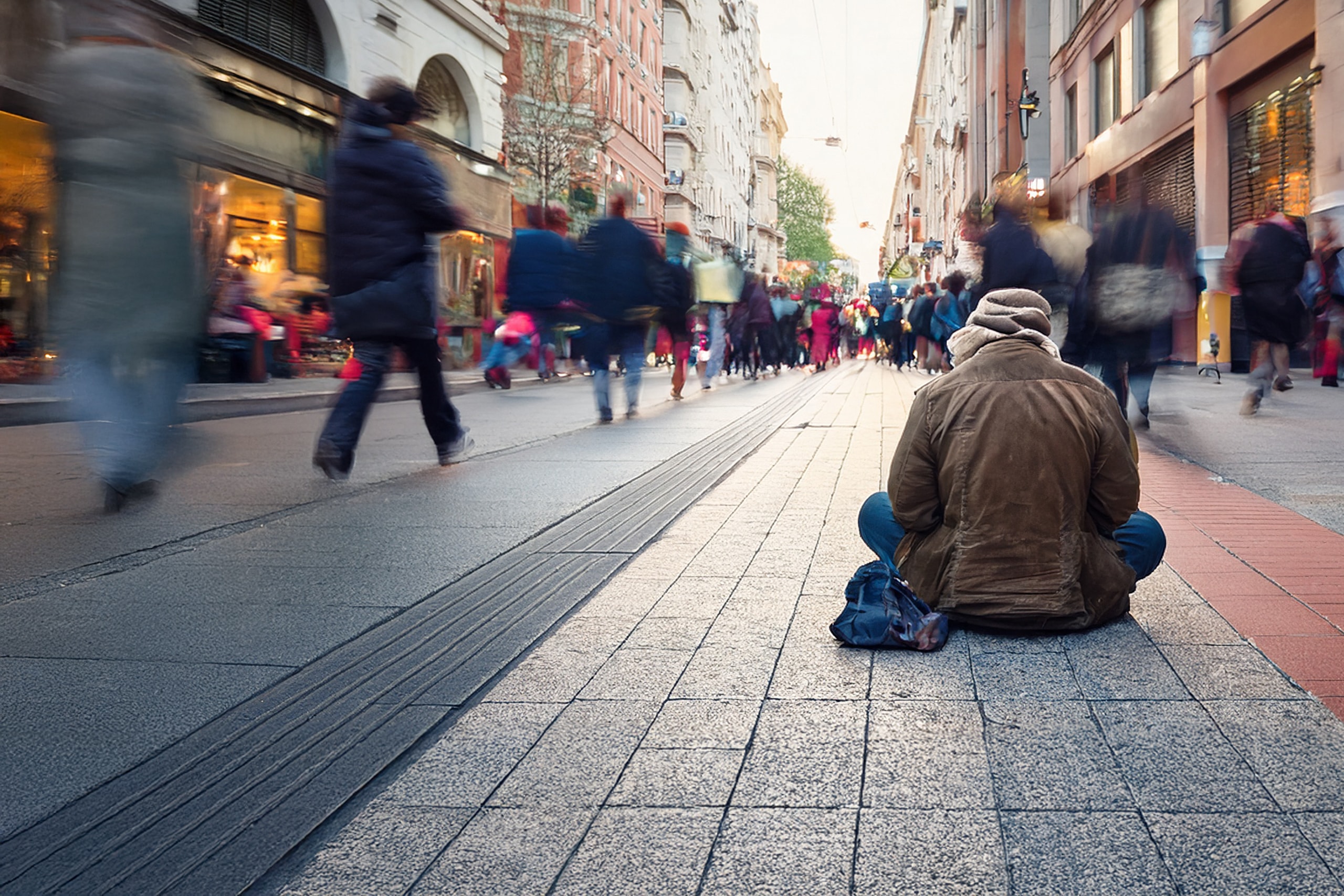
Some people have literally nowhere else to go. For others, being on the street is safer or easier than their other options, such as returning to abuse, or an overcrowded household.
Should I give homeless people money?
Usually, it isn’t a good idea. Some beggars are addicts, and cash will support their addiction without helping them. It is kinder to give food, non-alcoholic drinks, toiletries, or clothing.
Some beggars are trafficked in gangs and are not homeless at all. It is not illegal to sleep rough, but it is illegal to beg for money. Report nuisance behaviour to local police on 101.
How can I help homeless people?
It isn’t easy, but it is possible to transform lives. We give advice on our website, or we can send you a free ‘How to Help Homeless People’ guide.
Making regular contributions to a homeless charity, and donating clothes and food, are ways you can make a difference to people who are unhoused. Always check with them first before donating – they may have a coat and not need another, and of course, they have nowhere to keep extraneous goods safe. Some people will benefit most from a moment of your time. Being treated with care, respect and humanity can sadly feel alien to those living their lives on the streets, and a chance to talk could be more valuable to them than offering their fourth sandwich of the day.
Please also consider making a donation to our work. We give around £6,000 a week in small grants to homeless people to help them rebuild their lives. Demand for these grants has doubled in the past year.
Leave a Reply