
Securing accommodation is a vital step when someone experiences homelessness. But for many people living in temporary accommodation in England, food insecurity does not disappear once housing is found.
In some cases, access to affordable and nutritious food becomes more complicated.
The scale of temporary accommodation
Government statistics reported by the UK Parliament House of Commons Library show that over 100,000 households were living in temporary accommodation in England in 2023, including many families with children.
At the same time, the Joseph Rowntree Foundation estimates that 7.5 million people across the UK experienced food insecurity in 2023/24.
Housing instability and food poverty frequently overlap.
The Trussell Trust has also reported high levels of housing insecurity among people referred to food banks. Even when accommodation is secured, financial pressure often remains.

Limited cooking facilities and restricted diets
Temporary accommodation can include hostels, bed and breakfast placements and short-term flats. While arrangements differ, many residents face practical barriers to preparing meals.
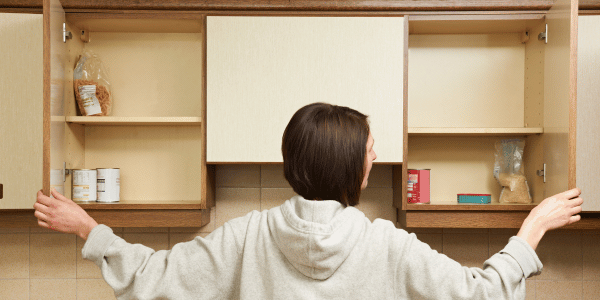
Access to kitchens may be shared or restricted. Private rooms may not have a fridge or adequate storage space. Equipment can be limited.
Without proper facilities, buying and storing fresh ingredients becomes difficult. Bulk buying is not possible. Leftovers cannot be kept safely.
As a result, diets can become repetitive and limited. People may rely on ready-to-eat food or small, frequent purchases from local shops, which are typically more expensive and offer less variety.
This is not simply about preference. It is about the constraints created by the environment.
The wider impact
Restricted food access can affect physical health, energy levels and overall wellbeing. Financial pressure often continues because food costs more when it cannot be prepared economically.
For families in temporary accommodation, the situation can be particularly challenging. Parents may prioritise children’s meals while limiting their own intake. When placements extend for months, the strain accumulates.
A roof overhead provides safety and shelter. It does not automatically restore stability in everyday life.
Looking beyond emergency housing
Understanding the relationship between temporary accommodation and food insecurity highlights how complex homelessness can be.
Accommodation is essential. But the ability to cook, store food and manage daily routines also shapes how sustainable that housing feels.
At Church Homeless Charity, we support people who are experiencing homelessness or living in temporary accommodation through practical grants for essential items. If you would like to find out more about how this support works in practice, you can read more about our small grants and their impact.