

Gardening is one of the most popular uses of our grants – and it’s easy to understand why. With a modest amount of funding for plants, seeds and tools, supported accommodation schemes can turn unused outdoor areas into spaces where people start to feel better, learn new skills, and connect with others.
Across our partner schemes, gardening groups are helping residents to:
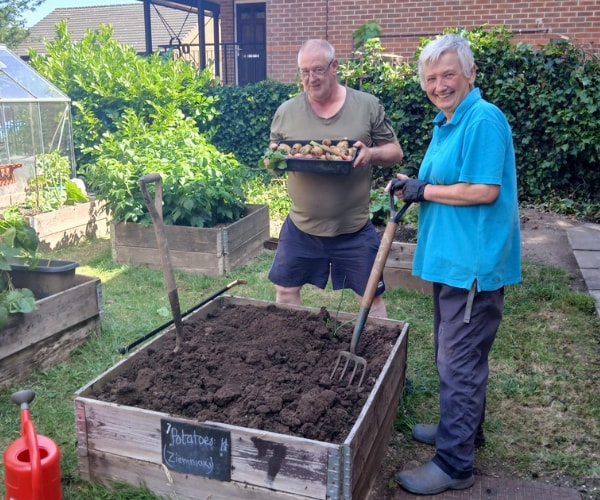
- spend time outdoors in nature
- work on practical projects and problem-solving
- grow fresh, healthy food
- build relationships and a sense of routine
“The garden is fantastic and such a haven in the middle of MWH! We have one customer in particular who tends to it every day, but when our volunteer is here and we are out in the garden, lots of people stop by to help and pick strawberries, radishes and potatoes from the garden.”
Maria Beaumont, Specialist Support Worker at Marsh Way House, Wakefield
Why gardening helps mental health
There is growing evidence that gardening improves wellbeing. The Royal Horticultural Societyreports that just 30 minutes of gardening can lower levels of the stress hormone cortisol and improve mood.
Meanwhile, Public Health England identifies access to green space as a key factor in tackling loneliness and improving mental health outcomes.
Residents who may be struggling with anxiety, depression, or low confidence often describe gardening as a calm, absorbing activity that “gets them out of their own head”.
Schemes regularly tell us that people who were reluctant to leave their rooms begin to step outside more often, simply to check on the plants. These small steps show real progress.
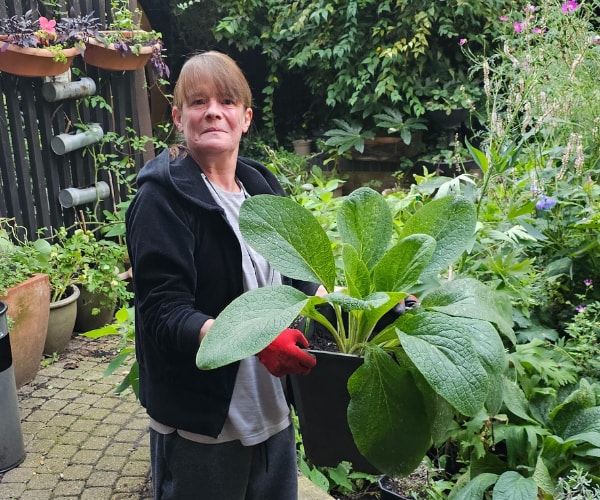
“What can I say about this place? It’s saved my life, to be honest. Because it gave me a bit of hope when I was a bit lost. It gave me some purpose in the day. There are a lot of people who come in here and get a bit of – I don’t know – it just gives people an uplift, the colours, just being in here with nature. I think it makes you want to be cleaner as well, living in a hostel where you let things go sometimes. It’s also helped me to work in other places, like the Trinity Hospice garden, with the gardening skills I’ve got here. I’m blessed by this place.”
Jamie- Resident at King George’s Hostel, London
“I’ve been watching from my window, seeing people working out here. That’s why I’m involved now. It’s like our baby. We are happy to spend time here. Thank you. It gives us an open mind, makes you respect yourself.”
Roger – Resident at King George’s Hostel, London
Building useful skills
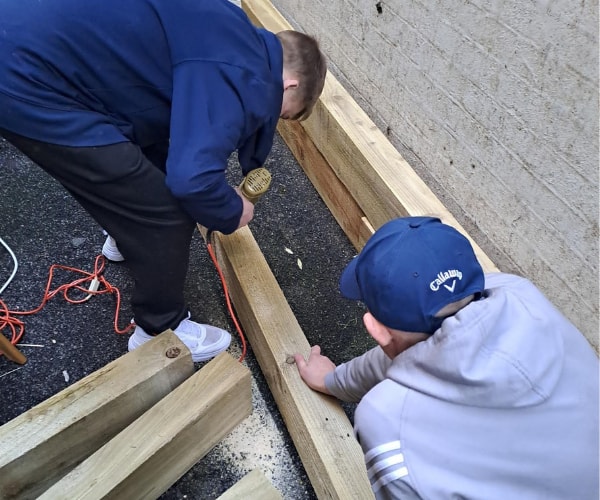
Gardening projects also teach practical skills that last far beyond the growing season. Residents take part in:
- assembling flat-pack benches and garden furniture
- measuring and building raised beds
- planning crops and harvesting
- painting fences and protecting timber
These activities help people develop teamwork, responsibility and problem-solving – all of which are beneficial when moving on into volunteering, work experience or employment.
A number of schemes have told us that involvement in garden projects has helped residents gain confidence to sign up for horticultural courses or volunteering roles.
Encouraging healthier habits
Growing fresh herbs, fruit and vegetables has another clear benefit: healthy eating. Residents often get involved in cooking sessions using their own produce, boosting their nutrition as well as their pride in what they’ve achieved.
Research by the University of Exeter has found that access to community gardens is linked to increased vegetable intake and better overall health.
For people who may have struggled with poor diet or limited access to fresh food while homeless, this is an important step forward.
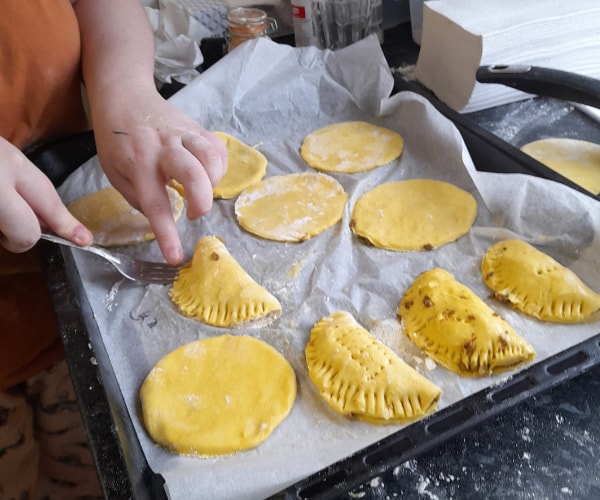
“We have been mostly growing herbs, chillies and tomatoes and planted up a few geraniums. The residents have had fun caring for the plants, watering, and seeing the chillies grow and trying out the different flavours.
We have used the herbs in our cooking and nutrition workshops. We have made pork and chilli patties, plenty of homemade pizzas, and garlic and herb breads. The residents have also used the produce when they are cooking with their own ingredients.
The grant money has enabled our residents to have a lot of fun outside and in the kitchen. It has also been a great distraction from everyday struggles, providing a quiet place for contemplation to be out in the fresh air with hands in the soil.”
Suzanne Hathaway – Ark House, Stroud
Small grants, big impact
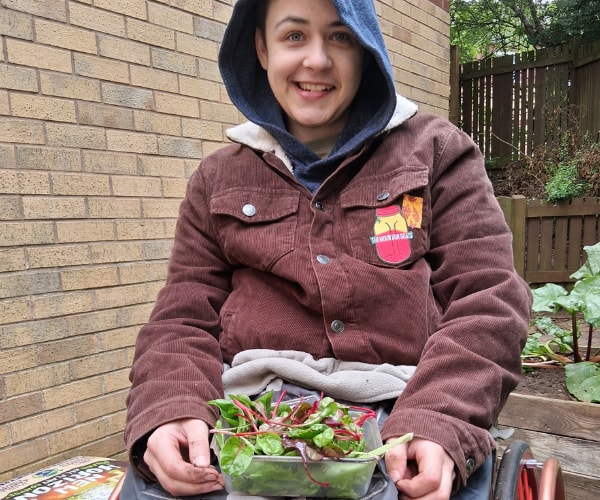
Gardening projects don’t have to be expensive. Many of the schemes we support start with just a few hundred pounds to buy compost, tools, timber and seeds. If space is limited, container gardens and vertical planting systems mean even small courtyards can be transformed.
What matters most is giving people the chance to take part in something positive, see progress, and feel part of a team.
We want to fund more gardening projects so that people who have experienced homelessness – of all ages and backgrounds – can benefit from time outdoors, practical learning, and connection with others.
Please donate today and help us fund more gardening projects for homeless people.
Your support could help someone grow in confidence, develop lifelong skills, and look forward to a brighter future.